
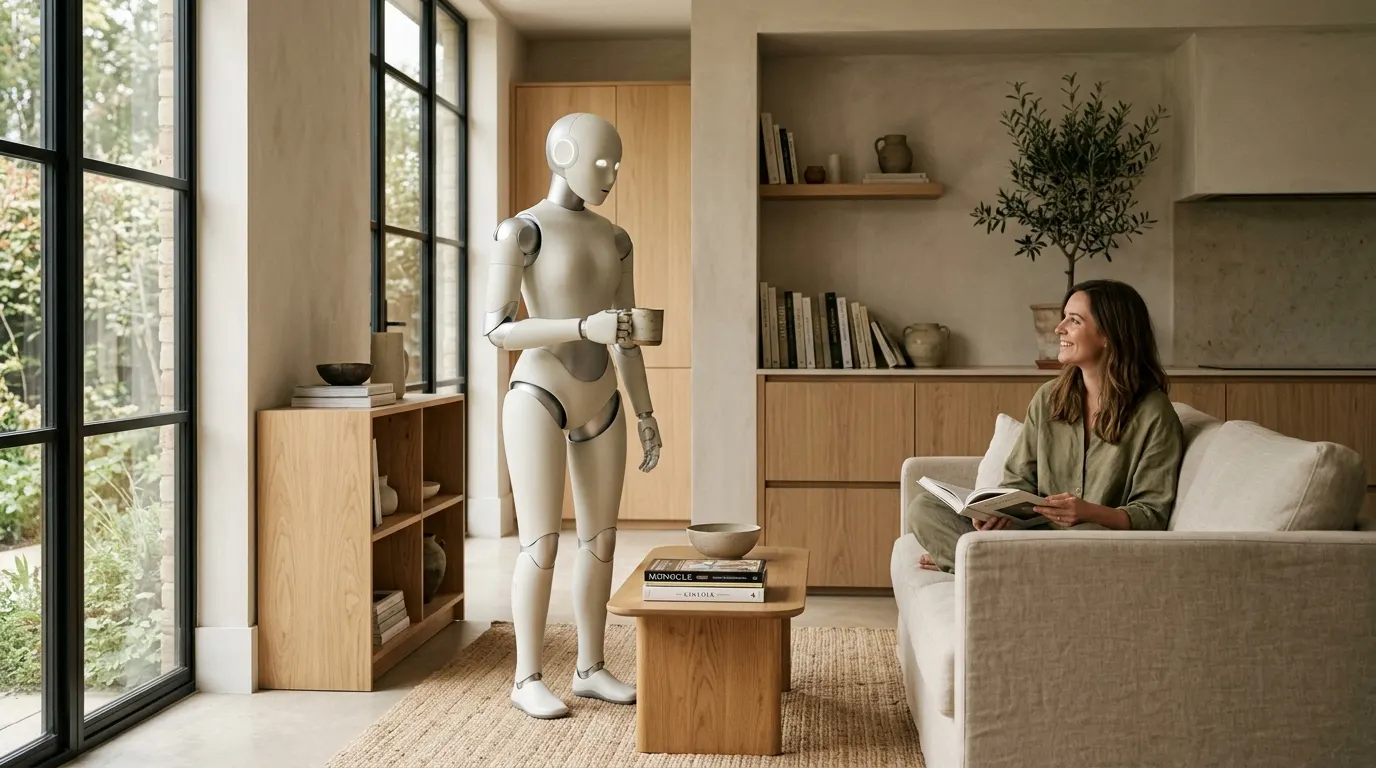
For half a decade, humanoid robotics existed in a carefully curated theatre of viral clips. We watched hydraulic prototypes perform backflips in sandpits, watched electric bipeds sort automotive battery packs on factory floors, and marvelled as tele-operated fingers gingerly peeled eggs. These demonstrations proved mechanical feasibility in controlled, predictable environments. But the announcement that consumer-tier humanoid units are now shipping for domestic deployment shifts the conversation entirely.
The domestic home is not an automotive assembly line. It possesses no taped yellow safety perimeters, no uniform lighting rigs, and no predictable part feeds. It is a chaotic, non-deterministic landscape populated by scattered children’s toys, unpredictable pets, thick pile rugs, shifting sunlight, and fragile heirloom ceramics. To move from the warehouse into the living room is not merely an incremental software update; it is an ontological leap.
Why the Domestic Boundary Matters
Until now, our interaction with artificial intelligence has been mediated through glowing panes of glass. Even the most capable large multimodal models remain trapped behind pixels, waiting for us to prompt them or check their notifications.
A humanoid robot dismantles that boundary. By embodying cognitive reasoning inside a physical chassis capable of applying dozens of newton-metres of torque, artificial intelligence ceases to be an advisory tool. It becomes an ambient physical agent sharing our private sanctuary. It breathes our domestic air, walks our floorboards, and manipulates the physical objects that define our daily rituals.
The Compelling Promises: What Humanoids Offer
To recognise why billions of pounds of capital are pouring into this transition, one must examine the sheer volume of unpaid, repetitive domestic labour that exhausts modern households. The compelling advantages of domestic humanoids fall into three distinct categories:
1. Radical Domestic Time Subtraction: The average UK household spends between fifteen and twenty hours each week on low-leverage maintenance chores: stacking dishwashers, clearing countertops, folding laundry, sorting recycling, and scrubbing tile grout. By delegating these chores to an embodied agent, families reclaim the scarce resource that modern knowledge work systematically erodes: contemplative leisure.
2. Dignity and Independence in Ageing: Across Europe, Japan, and North America, demographic shifts have produced an acute shortage of domestic care workers. A capable humanoid does not replace the human warmth of visiting grandchildren, but it can assist an elderly person with standing, carry heavy shopping bags, ensure medicine regimes are strictly adhered to, and notify emergency services if an irregular fall is detected—allowing people to grow older in their own homes with autonomy and dignity.
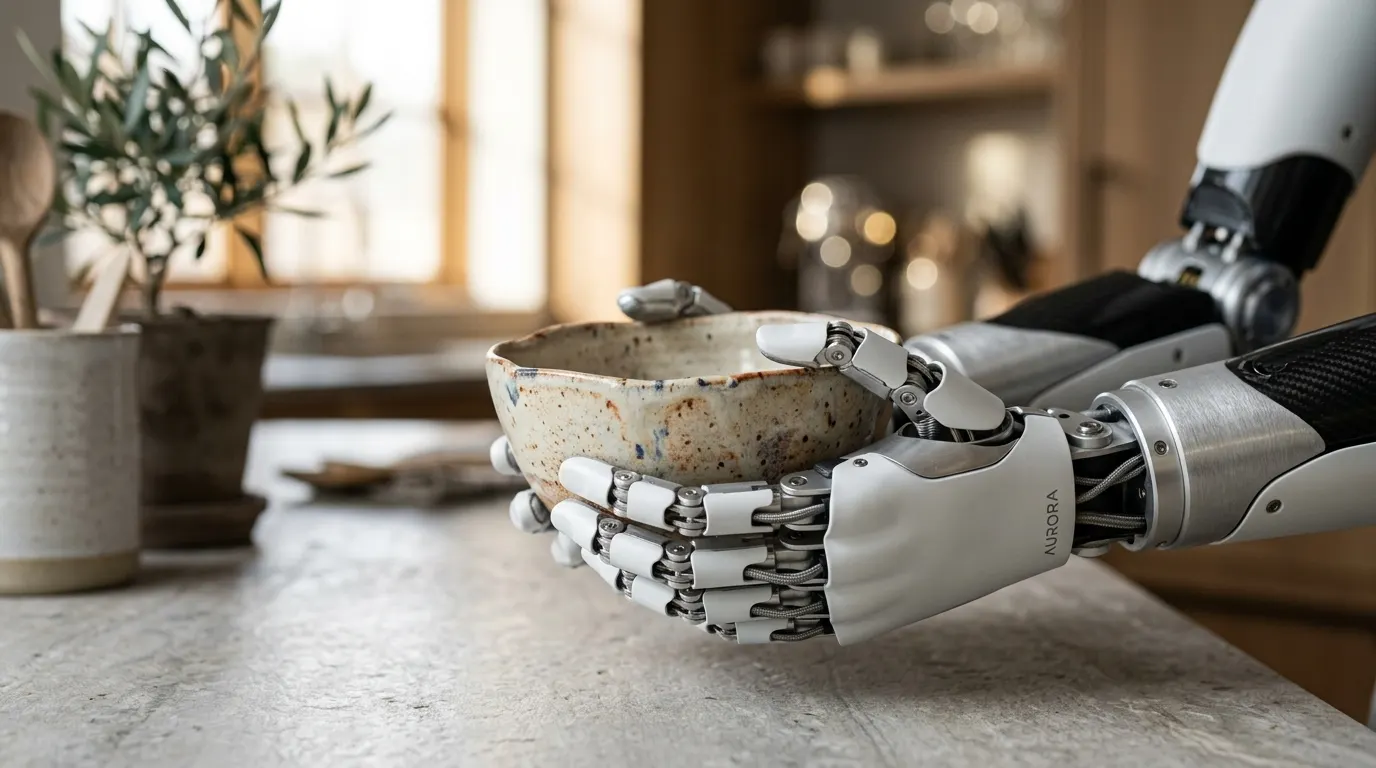
3. True Spatial Versatility: Unlike single-purpose household appliances (such as automated robotic vacuum discs or dishwashers), a humanoid utilizes human-scale architecture: it climbs stairs, opens traditional hinged cupboards, reaches high pantry shelves, and manipulates tools designed for human hands. You do not need to rebuild your home to accommodate the machine; the machine was shaped to fit the home.
Navigating the Frontier: The Real-World Engineering Hurdles
Part of what makes this engineering frontier so exhilarating is the sheer calibre of problems being solved in real time. Deploying physical machines into everyday households requires mastering challenges that digital software never had to confront:
Why We Love the Idea: The Joy of Welcoming Robots Home
Let us be unequivocally clear: we love the prospect of humanoid robots entering the domestic sphere. It is, without exaggeration, one of the most thrilling technological milestones of our lifetime.
For over a century, popular culture and science fiction have dreamed of helpful, benevolent robotic companions—machines that cheerfully take over the exhausting drudgery of domestic upkeep so humans can spend their fleeting hours creating, exploring, learning, and relaxing with those they cherish. Seeing that lifelong dream step out of cinematic speculation and walk into our actual kitchens and hallways is pure magic.
The bipedal humanoid form is a stroke of pure design genius. Our homes were never engineered for tracks or wheels; they were shaped over centuries for two legs and two hands. They are filled with staircases, thresholds, cabinet handles, and high pantry shelves. By adopting our form factor, humanoids fit seamlessly into our architectural world without demanding that we rebuild our spaces or clutter our rooms with single-purpose gadgets.
Imagine descending the stairs on a chilly morning to find the kitchen counters pristine, the recycling sorted, the dishwasher emptied, and a fresh pot of coffee brewed. Imagine parents who have worked a taxing nine-hour day being liberated from three hours of late-night laundry and scrubbing, giving them back uninterrupted storytime with their children. Imagine elderly relatives enjoying years of extra independence in the homes they love because an unfatigued, attentive assistant is always there to carry heavy items and offer a steadying hand.
This is not about replacing human connection—it is about liberating human vitality. When engineering excellence pairs with taste—creating robots that are calm, quiet, beautifully proportioned, and respectful of domestic peace—the humanoid robot ceases to be a sci-fi curiosity. It becomes one of the most delightful, transformative companions we will ever invite across our front threshold. The future of home robotics is radiant, and we cannot wait to welcome them through the door.