

Every independent business we partner with—from regional logistics hubs and specialist manufacturers to creative design practices—shares an unspoken, daily point of friction: the analog check. The paper clipboard dangling beside a machinery bay. The handwritten delivery sheet. The morning inspection ledger that a team member diligently scribbles on, only for that information to sit dormant for days until someone endures the administrative grind of manual data entry.
This is where momentum silently leaks. High-calibre team members, hired for their craft and strategic judgement, spend thirty to forty per cent of their working hours playing administrative catch-up. They retype numbers from crumpled receipts, copy rows between incompatible spreadsheets, and chase colleagues for missing handwritten notes.
The Illusion of the All-in-One Dashboard
The conventional enterprise remedy has been predictable: purchase another SaaS subscription. Roll out an elaborate ERP suite with seventy-four configuration menus, mandate two full days of staff training, and compel everyone to log into yet another proprietary interface on their mobile devices.
In practice, this almost always falters. When a technician's hands are greased or an inventory manager is balancing three packages on a loading dock, they will not navigate seven sub-menus to input a serial number. They will reach for a pen and a clipboard, or jot it down on the back of an envelope. The digital software remains pristine, expensive, and empty.
Constructing the Analog Bridge
Instead of forcing humans to bend their natural physical habits to rigid software, we construct what we call The Analog Bridge. We allow the physical ritual to remain effortless, while custom AI agents handle the cognitive translation behind the scenes.
Consider a real-world scenario we encountered with an independent distribution business. Rather than introducing complex scanning software, we embedded a lightweight WhatsApp agent. At the conclusion of a pallet inspection, the warehouse supervisor snaps a photograph of the physical clipboard and speaks a five-second voice note: “Batch forty-two arrived intact, slight moisture on corner seal, release to bay three.”
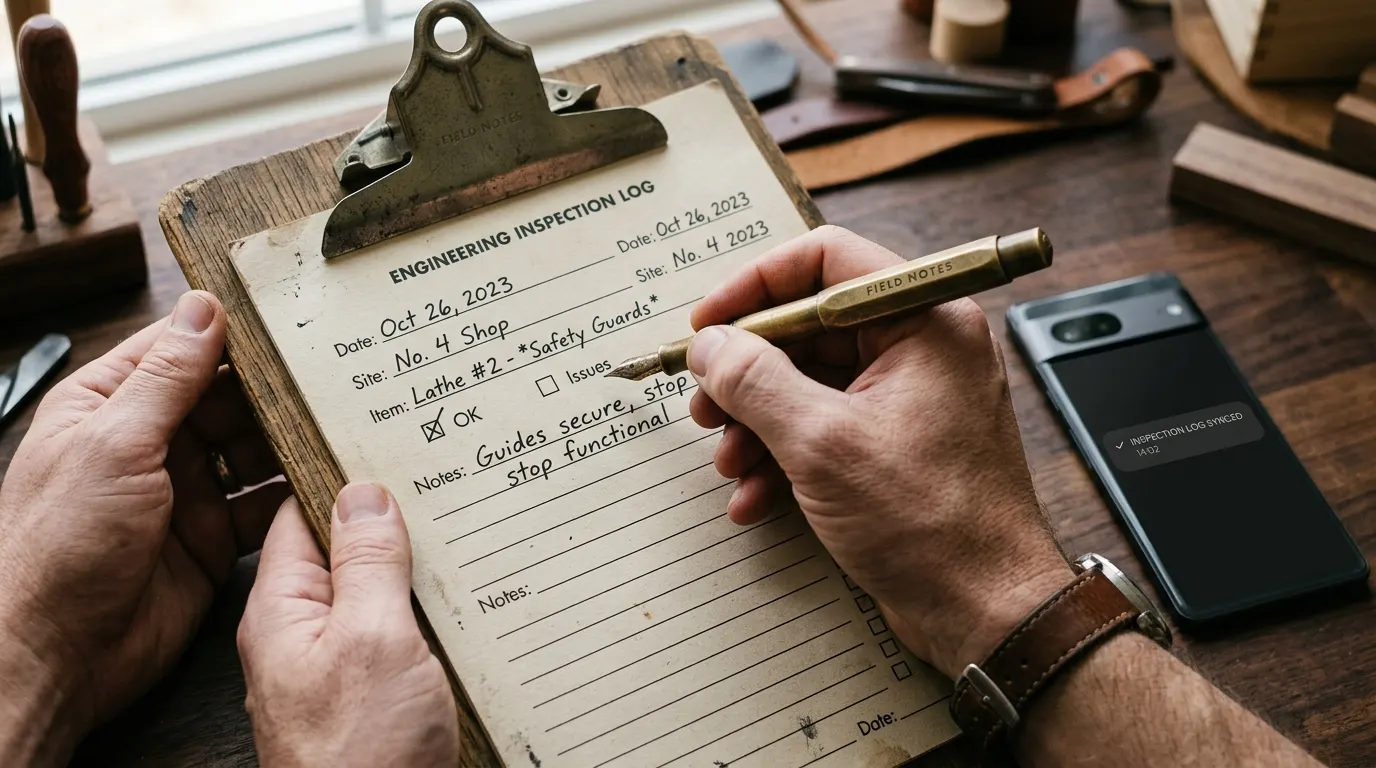
Within four seconds, our vision-and-voice agent performs three distinct actions without human intervention:
- Optical Extraction: Parses the handwritten checkboxes and temperature readings from the photograph.
- Audio Synthesis: Transcribes the verbal nuance, tagging the condition note to the specific pallet reference.
- Downstream Synchronisation: Formats the data into the company's central inventory database and flags the moisture alert on Slack for the quality supervisor.
The team member spent eight seconds interacting with their phone. No logins. No dropdowns. Zero retyping. The analog check was preserved, but the administrative drag was eliminated entirely.
Taste as an Engineering Metric
Building with AI is no longer a question of computational capability; large multimodal models can comfortably read cursive handwriting and transcribe ambient audio. The real differentiator is taste.

Taste means knowing what to leave out. It means refusing to clutter your staff's working week with automated notifications they do not care about. It means formatting output messages with typographical clarity and brevity, ensuring that when an alert does arrive, it commands immediate respect.
When pace is combined with taste, technology stops feeling like an imposed corporate mandate. It starts feeling like what it was always meant to be: a quiet, capable partner that handles the repetitive grind so your team can focus on the work that truly matters.